“Counterfeiters enter the Legitimate Supply Chain…Your Move” Whitepaper
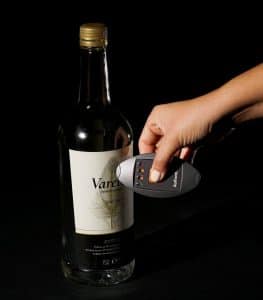
To learn more about how you can act quickly when authenticating a package in the field, visit us here.
Contact us today to speak with an expert.

“Counterfeiters enter the Legitimate Supply Chain…Your Move” Whitepaper
To learn more about how you can act quickly when authenticating a package in the field, visit us here.
Contact us today to speak with an expert.

To learn more about how you can act quickly when authenticating a package in the field, visit us here.
Contact us to speak with an expert today.
Time is never on your side when your pharmaceutical product is counterfeited and your brand reputation is at stake.
The World Health Organization recently passed along some pretty alarming news: it cited statistics claiming that global sales of counterfeit pharmaceutical products could top $75 billion this year. That’s a 90% increase over the last five years! More than likely, your pharmaceutical company is in the process of addressing this growing problem. It’s critical that you adopt effective measures that prevent counterfeiting (below you’ll find a guide to some of the best tools available). The counterfeiters plaguing the pharmaceutical world are resourceful and relentless. Chances are, a counterfeit version of one of your products will eventually make its way into the marketplace. That’s when the ability to react swiftly becomes paramount—to beat the bad guys, you must have the right tools in place to instantly authenticate suspicious packages in the field, where and when it matters most.
You’ve heard the cliché, “Timing is everything”. That certainly holds true in the pharmaceutical world. When the authentication of your product takes too long, it can be extremely damaging to the patients who depend on your products for their health, to your revenue stream, and to your brand reputation. So, what’s the best route to being able to instantly authenticate your products in the field? By choosing the right authentication solution for your company. You have many options—here’s a look at the different tool sets that can assist you in authenticating suspicious packages reported in the field:
Visible to the naked eye, allowing health professionals and patients to easily identify the authenticity of the package. For overt features to be effective in identifying a counterfeit product, health professionals and patients must know what they are looking for when they inspect a package. Consequently, public education and awareness are very important elements of any overt security plan. Solutions commonly employed for overt security include:
Utilize an image invisible to the naked eye, often printed with security inks on primary and/or secondary packaging. These security inks can only be detected using a device. Examples of security components and inks include:
Being covert organic compounds, are not readily recognizable and require special tools for detection and validation. Whereas machine-readable taggants can be detected in the field, forensic markers must often be taken to a laboratory with specialized equipment. The use of forensic markers allow companies like yours to pursue legal actions against counterfeiters, conduct private investigations and cooperate with law enforcement agencies.
They use two-dimensional data matrix codes and radio-frequency identity tagging. Each product is assigned a unique identifying code during the manufacturing process that allows it to be tracked, traced, verified, and recalled if necessary. Serialization “track and trace” methodology provides a basic security coverage, but it is likely to fall short of the overall goal of keeping the pharmaceutical supply chain free and clear of counterfeit drugs. Counterfeiters have access to the best printers and can easily copy unique codes and apply them to their counterfeit products. To combat them and create greater security in your supply chain, you must strengthen your anti-counterfeiting efforts by combining multiple authentication features.
The Internet is one of the primary avenues counterfeiters use to pass off their counterfeit products to consumers. Keeping ahead of the counterfeiters is becoming more challenging in this space. Implementing a comprehensive online monitoring platform can help you quickly identify sites that are taking advantage of your brand, remove the counterfeit links, provide appropriate enforcement measures and help reduce online abuse.
It’s important to look for an online monitoring system that has internal and external capabilities to monitor dark web and gray web activities related specifically to online pharmacies. A constant review of the data is imperative to understand where breaches are taking place.
Any of the solutions mentioned above will help authenticate a suspicious package reported in the field—but to stay ahead of the bad guys, you’re going to need more. You’re going to need an authentication platform with some serious power.
When you adopt this kind of customized authentication platform, you’re taking a proactive approach that combines the best available technologies—providing you with the “authentication super powers” needed to protect patients and your brand reputation. You’ll have access to an integrated set of software applications designed to enable successful deployment and operation of an authentication program. You’ll be able to act based upon brand insights that are aggregated, analyzed and reported directly to the smartphones, tablets and computers of your team. Best of all, you’ll be able to perform instant, in-field authentication allowing you to take immediate action.
Implementing a multi-layer approach takes you one step closer to successfully combating counterfeit products. This type of approach combines proven authentication tools with accurate data collection and analytics, providing you with authentication empowerment to save the day.
Remember, timing is everything. Having the right customized authentication solution will provide you with a proactive process that will save you time and, quite possibly, lives. When you can identify, and remove counterfeit products quickly, you’re bound to become your company’s authentication hero.
Contact us today and become an authentication hero.
By: Jeff Conroy, Chief Scientist, Authentix
Many companies are thinking more broadly about how to implement coordinated anti-counterfeiting, anti-diversion strategies across their brands and throughout different regions of the world. Just as tamper-evident seals on bottles of pills and liquid formulations became more common due to a tampering scare in the 1980s, attitudes toward anti-counterfeiting technologies are beginning to evolve.
Once viewing such measures narrowly as an “extra feature” that only “added cost” to the bottom line, brand owners are beginning to realize the importance of protecting the integrity of their brands and the most important part of the equation: protecting the safety of consumers. As serialization technologies continue to evolve, the tracking of individual units through the supply chain could enable very secure and traceable evidence of authentic products being supplied by manufacturers and distributors to end users.
Anti-counterfeiting features that can authenticate products are both overt and covert, and they can be applied in numerous ways: on labels, onto closure seals, on cartons where containers of products are stored, into plastic parts of individual packaging, and even onto metal and glass components of packaging.
The different types of features all serve a different purpose, from enabling end users to quickly identify a branded product as genuine, to covert markings that enable a manufacturer or inspector to identify the source of diversion or other illicit activity. When combined with the careful design and production quality controls used in authentic product manufacturing, these features raise the bar of complexity for counterfeiters and make the product a less attractive target.
With that said, it’s worth considering the value of individual security features versus a multilayered approach.

Visible security features serve a valuable purpose in the authentication stack. They offer a way for individuals to inspect packaging without any specialized tools, and the specialized color-shifting inks (similar to those used on currency) are often difficult to reproduce using scanners or reprographic methods. There are other types of optically variable features as well, including holograms, micro-optics (like the blue stripe found on the current US $100 bill), and reflective features.
Visible security features are a starting point, but counterfeiters are extremely creative and clever. Even if a visible authentication feature is hard to recreate perfectly, a counterfeiter only needs to copy it closely enough to confuse a consumer who just gives a package a quick glance. Additional features create layers of security.
High security covert features can be embedded into labels, closure seals, or other features of product packaging. Although such markers are invisible to the naked eye, they can be detected using specialized handheld surface spectrophotometers. Field instruments use proprietary excitation and detection optics and detection algorithms for rapid, secure field authentication. Additional forensic layers of security are also embedded into the materials and can be confirmed through more extensive laboratory analysis. This additional layer of security proves very difficult for the counterfeiter, but easily verified by field inspectors.

In the serialization process, a company marks individual units at the point of manufacture (giving each a unique serial number) and implements stations to read those markings, capture the tracking data, and drop that information into a managed database that allows authorized personnel to monitor where products go after they leave the manufacturing facility. You’re probably most familiar with this process as it applies to shipping a package overnight, when you can track it on the Internet until it reaches its destination.
As a brand owner, it’s good to have options. However, the counterfeiter also has options. Fortunately, technology continues to evolve to help you protect your end users. Today’s reality is that one level of security isn’t enough.
Recently a number of technologies have become available that offer the benefit of not having to add any additional features to the packaging, but the imaging requirements on the production lines can be quite demanding and difficult to implement at speed. Once captured, the identification of the package can take place with conventional cameras, allowing widespread authentication and tracking by inspectors, retailers, or even consumers.
Any combination of covert or overt features or serialization enhance your anti-counterfeiting, anti-diversion strategies. Click here to learn more about brand protection. You can also contact Authentix at info@authentix.com.
By: Andrzej Hornostaj, VP Brand Solutions, Authentix
Identification of an at-risk product and implementing an authentication solution is not the end of the story, it is just the beginning. Constant inspection of the product in the supply chain and marketplace is required to ensure useful actionable insights is generated to minimize counterfeit and diversion practices while protecting your brand and bottom line.
Let’s Begin with Inspection Design
Inspection design is determined by the objectives of the inspection. Let’s consider two relevant approaches. Will the inspection be reactive to a specific counterfeit event, or proactive determining the scale of counterfeiting and generating actionable insights?
Ideally, inspections, like any investigation, should follow a holistic approach involving several stakeholder teams including product, brand protection, investigative, and legal. Each team has its own requirements for the actionable insights generated from an inspection. Some critical stakeholder questions may be as follows:
Product: What’s the scale and location of the counterfeiting problem for a product?
Brand protection: What’s the level of sophistication of the counterfeit operation (production and logistics)? Are security features being copied? Are packaging design changes required?
Investigative: Can the right data be gathered to support investigations into the counterfeit’s supply chain and to identify the manufacturing source? Is the evidence strong enough that it can be passed on to legal and law enforcement to perform raids and prosecutions?
Who will conduct the inspections?
The boots on the ground can either be members of the brand owner’s staff or third-party inspection agencies working on their behalf. Ideally, to infer useful insights from an inspection, the more data collected the better. This need pushes the brand toward engaging a third-party that can provide the coverage and inspector numbers to achieve data volume.
As always, inspector safety is paramount and consideration should be taken as to whether the inspector needs to be accompanied by law enforcement representatives.
Where to direct initial inspection efforts?
I would suggest initial efforts begin at the retail level where products of interest are typically more accessible to covert inspection. This type of insight helps to determine the scale or extent of the problem and generates a suitable baseline against which further inspections and remediation efforts may be compared. As pharmaceuticals are usually not accessible at pharmacies, other locations in the supply chain should be the initial focus.
Once a baseline is established, then testing of supply chain integrity should be performed. Keep in mind, some obstacles may be encountered at this stage as it is not always possible to accurately track the route by which products reach the end user beyond the first tier distributors.
To assist access / auditing of stock at distributors, brands should ensure that cooperation agreements allow for inspections with short notification times. This will prevent suspect items from being removed from the audit location by a guilty party.
Which inspection tools should be used?
Having the right tools during an inspection to automatically capture the data required for each stakeholder is important and ensures that repeat testing is minimised. With the right type of reader paired with a smart device, inspectors are equipped to not only identify counterfeit products, but also capture location data and photographs of the packaging. This complete picture of the scale and sophistication of the counterfeit operation can form the basis of effective enforcement actions.
Click here to learn more about brand protection. You can also contact Authentix at info@authentix.com.
The Partnership for Safe Medicines® recently hosted a panel briefing of several former federal law enforcement officials and public health experts to discuss the merits of recent prescription drug importation proposals[1]. The panel highlighted one of the often overlooked aspects of these proposals aimed to quickly reduce the cost of prescription drugs to patients in need in the United States: the safety of these drugs that would circumvent current FDA regulated domestic supply chains.
Certainly the promise of lower cost prescription drugs is a powerful message to an electorate that sees the costs of these medicines continue to rise while stories of lower cost drugs in other parts of the developed world also make headlines. But those other countries have carefully negotiated and managed supply chains with pharmaceutical companies that ensure the safety of their drugs and often make it illegal to fill a prescription from outside the country. Such is the case in Canada, where Canadian pharmacies cannot fill prescriptions for U.S. patients. Instead, internet pharmacies that claim to be Canadian import drugs or counterfeits sell them to unsuspecting consumers. Like it has for so many other industries, the internet has enabled easy access of buyers and sellers, but with little accountability for product quality or authenticity. Consumers are left to trust the supplier is legitimate, often with no means for recourse if there is a problem.
So why not simply empower the FDA with oversight on importation of drugs from other countries to help ensure safety? That’s a reasonable proposal, but one that will undoubtedly add to the cost of importation. Furthermore, this is not a U.S. only policy problem. For example, if the U.S. and Canada were to legalize the import/export of drugs between the two countries, what would be the effect on Canadian drug prices? In 2014, total Canadian expenditures on prescription drugs was estimated to be $29B[2]. By comparison the United States spent $374B[3]. Even a mild influx of orders from the U.S. could stress the Canadian system, more importantly Canadians, affect pricing since drug companies will be forced to negotiate with Canada as an international supplier, and not a domestic single payer system, certainly driving up costs for Canadians.
The U.S. has left the pharmaceutical industry largely unregulated when it comes to pricing. We have no single payer system, we do not place limits on pricing, and we let the profit motivation of the free market system drive pricing, profit, investment, and innovation. And while we can certainly feel the effects of rising drug costs, we can also see that this system has of its own accord driven us to greater and greater innovation for treatments and cures, and has created a very secure supply chain for the sale and distribution of those medicines. There is almost certainly some kind of change and reform coming to healthcare costs in the U.S., and the pharmaceutical industry will have its part to play, but compromising safety cannot be part of the equation.
Counterfeiting and diversion of medicines and medical products are global issues that affect all countries. These illegal activities threaten the health and welfare of the citizens who receive fake or substandard product, as well as threaten the revenues of brand owners. These activities also undermine the efforts of the government to ensure the availability of affordable drugs to its citizens, thus enabling the proliferation of disease, which can lead to development of drug resistant pathogens.
Authentix is dedicated to the development of products and services that allow the authentication of products and their packaging in supply chains around the world. Authentix provides integrated programs that enable manufacturers to protect their products in complex supply and distribution chains, and informatics to monitor and report on problems as they become apparent.
For more information visit http://authentix.com/offerings/sherlox/.
1.) http://www.safemedicines.org/2017/04/the-fallacy-of-drug-importation.html
2.) https://www.cihi.ca/en/canadians-spent-288-billion-on-prescription-drugs-in-2014
3.) http://www.latimes.com/business/la-fi-drug-costs-20150414-story.html